
Brain fog, poor focus, and low mood, the nutritional angle most people overlook
Brain fog, poor focus, and low mood often have a nutritional explanation and DHA, Lion's Mane, B12, and magnesium are the four most commonly overlooked pieces.
If you've ever described yourself as "not quite with it" for weeks on end, fuzzy thinking, slow to start, struggling to hold a train of thought, you'll know that it's not a dramatic experience. It doesn't announce itself. It just quietly makes everything slightly harder than it should be.
Most of the time, the explanation people reach for is stress, screen time, or poor sleep. And those are genuinely relevant. But there's a layer underneath all of that which tends to get skipped over: the nutritional side of brain function. Because your brain, like every other organ, runs on specific raw materials. And when those materials are in short supply, it shows.
DHA and the structure of thought
We covered this in detail in our first blog this month, but the short version is this: DHA, one of the key fatty acids in Omega-3, is a structural component of brain cell membranes. Your brain cells need DHA to communicate efficiently with each other. When DHA levels are low, that communication becomes less fluid.
Most people on a plant-based diet have lower DHA levels than those who eat oily fish regularly, because the conversion from plant-based Omega-3 (ALA) to usable DHA is slow and unreliable. It's one of the most consistent nutritional gaps in the research on plant-based diets.
An algae-derived Omega-3 supplement closes that gap directly. Our Omega-3 EPA & DHA capsules provide 300mg EPA and 500mg DHA per serving, from microalgae, not fish.


Lion’s Mane: the mushroom that’s genuinely interesting
This is where things get fascinating.
Lion's Mane (Hericium erinaceus) is a mushroom with a long history of use in traditional medicine and, increasingly, a growing body of modern scientific research. The reason researchers are interested in it centres on two compounds found in the mushroom, hericenones and erinacines, which have been studied for their potential to support the factors involved in nerve health and brain cell function.
A 2023 pilot study reported improvements in cognitive flexibility and processing speed in adults supplementing with Lion's Mane over four weeks. The research in this area is still developing, and we're always careful not to overstate what the evidence shows. But the mechanism is plausible, the traditional use is long-standing, and the early research is genuinely promising.
Our Lion's Mane formula uses a full-spectrum extract from the fruiting body of the mushroom, the part above ground, which tends to contain a higher concentration of the active compounds than the root-like mycelium that many cheaper products use. Each serving provides 2000mg equivalent, alongside a B vitamin complex (B1, B2, B3, B5, and B6) and black pepper extract to support absorption.
The B vitamins in the formula earn their place too. B vitamins contribute to normal psychological function and the normal functioning of the nervous system, these are established, EU-authorised claims backed by solid evidence. The combination of Lion's Mane and B vitamins in a single formula means you're supporting brain function from multiple angles simultaneously.
It's not a stimulant. People who take it regularly describe it less as a buzz and more as a sense of clarity, a reduction in the friction that makes focused thinking feel effortful.

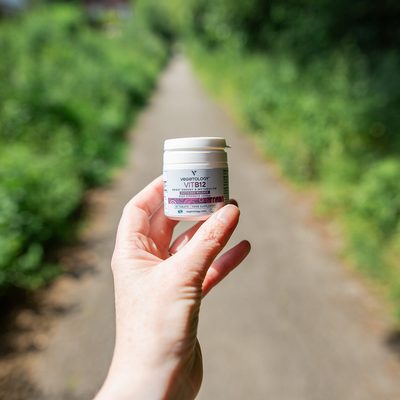
B12: the one that catches plant-based eaters out
B12 is worth a specific mention because it's the most common nutritional deficiency in people eating a plant-based diet, and one of the most consequential for brain health.
B12 plays an essential role in the formation and maintenance of the myelin sheath, the protective coating around nerve fibres that allows signals to travel quickly and accurately. Low B12 affects the speed and clarity of neural transmission. The symptoms include brain fog, poor concentration, and low mood, exactly the cluster of experiences people tend to attribute to stress or burnout.
B12 is not found in plant foods in meaningful quantities. It needs to come from supplementation or fortified foods. If you're eating plant-based and not actively supplementing B12, it's likely worth checking.
Our MultiVit includes B12 alongside 25 other vitamins and minerals in an engineered formula designed for optimal absorption, including chelated minerals that are more easily used by the body. It's a good daily foundation for anyone who wants comprehensive coverage without taking a handful of separate supplements.
Magnesium: the quiet one doing a lot of work
Here's a nutrient that comes up repeatedly in the brain health research and almost never in the supplements aisle marketing: magnesium.
Magnesium is involved in over 300 enzymatic processes in the body. Among them: regulating the nervous system, supporting psychological function, and contributing to normal energy-yielding metabolism. That last one matters more than it sounds. Your brain is the most energetically demanding organ you have, consuming roughly 20% of your body's energy output despite accounting for only about 2% of your body weight. Magnesium is part of the process that keeps that energy production running efficiently.
But the connection most relevant to brain fog and low mood is magnesium's role in the nervous system specifically. Magnesium acts as a natural regulator of NMDA receptors, which are involved in learning, memory, and mood. When magnesium levels are low, these receptors can become overactive, which is associated with increased stress response and disturbed sleep.
Sleep is where the magnesium story becomes particularly interesting. Research consistently links low magnesium levels to poorer sleep quality, including difficulty falling asleep, more nighttime waking, and less restorative deep sleep. And the relationship between poor sleep and brain fog is something most people don't need research to confirm. If your sleep is fragmented or shallow, your cognitive function the following day will reflect it.
UK dietary surveys suggest that a meaningful proportion of adults fall short of the recommended daily magnesium intake, particularly those avoiding dairy and meat. For anyone eating plant-based, magnesium is worth paying attention to.
Our Magnesium Complex uses a combination of Magnesium Citrate and Magnesium Oxide alongside Vitamin B6. The Citrate form is well-absorbed, and it also enhances the uptake of the Oxide component, which provides a higher concentration of elemental magnesium per capsule. One capsule a day, 500mg elemental magnesium, Vegan Society approved.

A practical framework
If brain fog and poor focus are something you're dealing with, the nutritional foundations worth looking at are:
Omega-3 (DHA and EPA), for the structural side of brain cell function and inflammation management. If you're plant-based and not supplementing, this is likely the most significant gap.
Lion's Mane, for cognitive support and nervous system health, with B vitamins included. Particularly useful during periods of high mental demand: exam season, demanding work periods, or any time sustained focus matters.
B12, for the integrity of neural signalling. Non-negotiable if you're eating plant-based.
Magnesium, for nervous system regulation, energy production, and sleep quality. Often the missing piece for people who've addressed the obvious things and still feel off.
These aren't magic solutions. Sleep, stress management, and exercise all matter for brain function too. But if those are already in reasonably good shape and things still feel foggy, the nutritional layer is a logical next step, and often a surprisingly quick one.


The gut-brain axis isnt woo
"Gut-brain connection" sounds like wellness-aisle hand-waving. It isn't. There's a literal nerve, a…
Why curcumin needs black pepper
Curcumin, the active compound in turmeric, is famously hard to absorb. A pinch of black pepper chan…
B12 isn't really about being vegan. It's about your gut.
B12 deficiency gets blamed on plant-based diets. But absorption is a gut story, not a vegan one. He…
Fish oil vs algae oil, what's actually different (and what isn't)
Algae oil and fish oil contain the same DHA and EPA molecules, because fish don't make it themselve…