Iron and B12: what your body actually absorbs (and how to help it)
Iron deficiency is the commonest nutritional deficiency on earth, across every diet, and nobody on the planet makes their own B12. Both are absorption stories rather than diet ones. Here's how absorption actually works, and six practical things that shift it.
Two facts to start with, because between them they reframe a conversation that usually goes nowhere.
One. Iron deficiency is the most common nutritional deficiency in the world, affecting roughly one person in four. Not one in four vegetarians. One in four people.
Two. Nobody makes their own B12. Not you, not anybody. It's made by bacteria, and how much of it reaches your bloodstream depends far more on your gut than on your groceries.
So neither of these is really a diet question, which is how they usually get asked. They're absorption questions, and absorption turns out to be far more interesting, and far more actionable, than whatever's on your plate.
Here's how it actually works, and what genuinely moves the needle.
Iron: the bit that isn’t about how much you eat
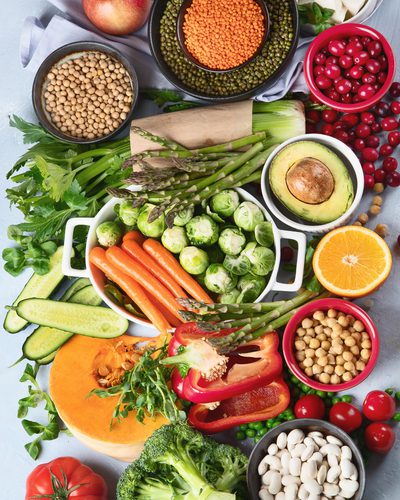
Most diets contain plenty of iron. Lentils, beans, tofu, tahini, pumpkin seeds, oats, dark leafy greens, dried apricots, fortified cereal. It's not a scarce mineral. Plenty of people eating no meat at all take in more iron than people who do.
The complication is that eating iron and absorbing iron are two very different things.
Two kinds, and why it matters
Haem iron arrives already bound into a ring-shaped molecule called haem. It's pre-packaged, it has its own dedicated absorption route, and very little interferes with it. It's found only in meat and fish.
Non-haem iron is everything else: the iron in plants, in eggs and dairy, in fortified foods and in supplements. It's absorbed by a different transporter, and it is highly sensitive to whatever else is in the meal.
Here's the part that surprises people: non-haem iron is the majority of the iron in almost everybody's diet, whatever they eat. Even in a fairly meat-heavy diet, most of the iron arriving is the fussy kind. Which means the absorption rules below aren't a plant-based workaround. They're how iron works for everyone, and most people just haven't been told.
Things that reduce non-haem absorption: phytates, found in wholegrains, legumes, nuts and seeds. Polyphenols in tea and coffee, which are potent inhibitors. Calcium, in quantity, in the same meal.
The thing that increases it, substantially: vitamin C.
The vitamin C effect, and the honest version of it
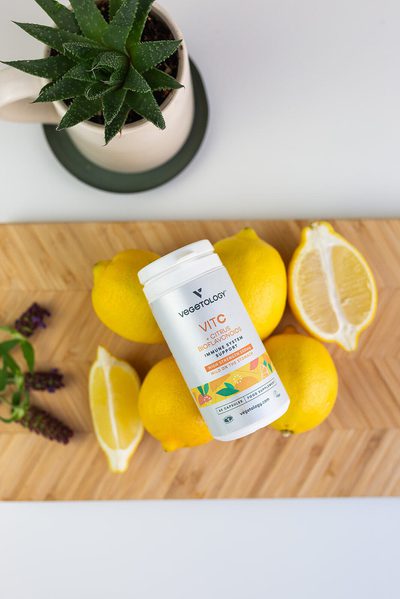
Vitamin C's effect on non-haem iron is one of the better-established findings in nutrition. It converts iron from one chemical state into another the transporter handles more readily, and it forms a soluble complex that keeps the iron available rather than letting phytates lock it away. Single-meal studies going back to Leif Hallberg's work in the 1980s found that adding around 50mg of vitamin C to a meal could roughly triple the non-haem iron absorbed from it.
And now the more useful half, which tends to get left behind when that figure travels.
Those numbers come from single test meals eaten by fasting volunteers, and the effect across a whole diet over time is considerably smaller. A 2001 study in the American Journal of Clinical Nutrition by Cook and Reddy looked at complete self-selected diets rather than individual meals and found ascorbic acid's influence on overall iron absorption far less pronounced than the single-meal work implied. Your body also self-regulates: absorb less at one meal and it adjusts uptake at the next.
So: pairing vitamin C with iron-rich food is real, free and worth doing, and it is not a magic multiplier. It nudges. Done consistently over years, nudging is exactly the kind of thing that adds up.
What actually shifts your iron status
Diet is one input among several, and usually not the loudest one.
Menstruation is the big one. Monthly blood loss raises iron requirements substantially, which is why around 30% of menstruating women worldwide are iron deficient regardless of what they eat. Pregnancy raises them again. Growth spurts in children and teenagers do the same.
Diet does show up in the data. A 2018 systematic review and meta-analysis in Critical Reviews in Food Science and Nutrition by Haider and colleagues pooled 24 cross-sectional studies and found adult vegetarians had serum ferritin around 30 µg/L lower than non-vegetarian comparison groups, a real difference in a real direction.
Two things to hold alongside it, though. Ferritin measures stores, not function: it's the fuel gauge, not the engine warning light, and plenty of people sit lower on that gauge indefinitely with nothing wrong. And it's a smaller effect than menstrual status, which is doing the heavy lifting in nearly every population you look at.
What we're not going to tell you to do
Take an iron supplement on a hunch.
Too little iron causes problems. So does too much. Iron accumulates, your body has no efficient route to shed the excess, and overload isn't a rare curiosity. It's why we don't sell a standalone iron tablet. If you think you might be low, that's a blood test and a GP conversation rather than a decision to make in an aisle, and we'd much rather point you there than hand you a symptom checklist to worry over.
B12: the one that comes from bacteria
B12 isn't made by plants. It also isn't made by animals. It's made by bacteria, and once you know that the whole thing gets much simpler.
It's the largest and most structurally complex vitamin there is, with a cobalt atom at its centre, and no plant or animal has ever worked out how to build one. Every microgram of B12 on earth was assembled by a micro-organism. Everything else in the food chain is just storage.
Which is why B12 is best thought of as a supply-and-absorption question rather than a menu one, and the absorption half is where it gets genuinely interesting, because it's the same for everybody.
There's good data on what happens without a plan. A 2010 analysis of the EPIC-Oxford cohort by Gilsing and colleagues measured serum B12 in 689 British men and found 52% of the vegans below the study's cut-off, against 7% of vegetarians and a single omnivore.
Worth reading that carefully, because it's usually quoted badly. It's British men, it's 2010, and it describes a group many of whom weren't supplementing at all. It isn't a statement that half of all vegans are deficient today. It's a statement about what happens when the whole thing is left to chance. Which is the useful finding, because B12 is about the easiest nutrient there is to be deliberate about. One tablet, roughly four seconds a day, done.
Why the doses look faintly absurd
Because the number on the label and the amount that reaches you are two different quantities, the same point we made about the gut back in July.
B12 gets in by two routes. One uses a carrier protein called intrinsic factor: efficient, but with a hard ceiling. The other is passive diffusion: no ceiling, and hopelessly inefficient. We went through the study that measured exactly where that ceiling sits in September. The short version is that the absorbed amount plateaus at roughly a microgram per dose whatever you swallow, so the percentage collapses as the dose climbs.
Which is why every B12 supplement on the shelf, ours very much included, looks ridiculous on paper. To reliably land a small amount, you have to start with a much larger one.
And that ceiling has a genuinely practical consequence: since each dose tops out at about the same absorbed amount, frequency does more than size. A daily habit beats an occasional heroic dose, every time.
Six things that actually help
The practical payoff, with the reason attached, because a tip you understand is a tip you'll keep.
1. Put a vitamin C source in the same meal as the iron. Peppers, tomatoes, broccoli, citrus, a squeeze of lemon over the lentils. This is the single highest-yield free thing on the list, and it works at the meal, so it has to be in the meal.
2. Move tea and coffee away from mealtimes. Polyphenols are potent inhibitors of non-haem iron. An hour either side is the usual rule of thumb. This costs nothing and most people have never heard it.
3. Soak, sprout or ferment pulses and grains. All three reduce phytate, which is a large part of why sourdough and soaked chickpeas keep turning up in this conversation. It's also why the traditional method usually turns out to have a reason behind it.
4. Keep calcium supplements to a different meal. Calcium competes with iron for absorption in quantity. Not a reason to avoid either, just a reason not to take them together.
5. Cook acidic things in a cast iron pan. A genuinely small but real amount of iron migrates into the food. It won't fix a deficiency, it's free, and it's a good excuse for a pan you'll have forever.
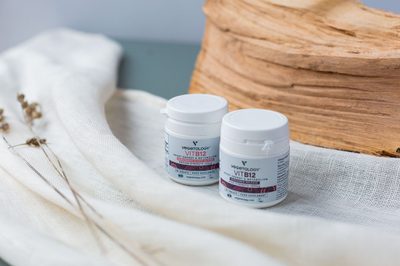
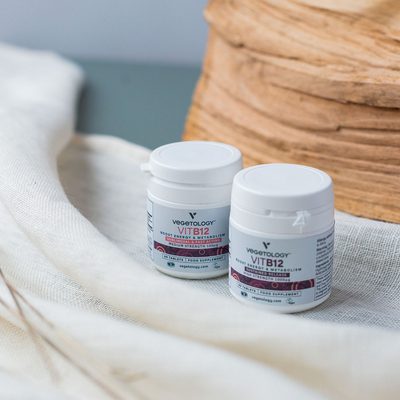
6. For B12, pick the format for your gut, not your diet.1000mcg sustained release releases gradually over several hours. 100mcg sublingual dissolves under the tongue and is absorbed through the mucous membrane, sidestepping the gut chain entirely. Swallowed B12 depends on stomach acid, intrinsic factor and a small intestine doing its job. If yours are reliable the format barely matters, and if they aren't, bypassing the chain is the whole point. Absorption does tend to get less reliable with age, for everyone.
And if nobody's looked at your B12 in a few years, that's worth a GP conversation. Running low is slow and quiet rather than sudden, which is exactly what makes it easy to leave unchecked.
Where we come in
MultiVit has iron at 14mg and vitamin C at 80mg in the same tablet, both at 100% of NRV. That isn't a coincidence of formulation. Vitamin C increases iron absorption is one of the authorised claims, it's the mechanism described above, and putting the two together at sensible amounts is the cheapest available way to act on it. Iron sits at 100% and no higher, deliberately, for every reason in the section above.
The other authorised wordings, since we've spent a whole piece on them: iron contributes to normal oxygen transport in the body, to normal formation of red blood cells and haemoglobin, and to the reduction of tiredness and fatigue. That last one connects straight back to the energy blog, iron being one of the few nutrients where being genuinely short and feeling genuinely tired are properly linked.
Everything we make happens to be suitable for vegans, because that's how we formulate. None of it is because plant-based eating needs rescuing. Absorption is a human problem, the levers above are human levers, and the six of them work on anybody.

Sunny countries have vitamin D deficiency too. Here's what that actually tells you.
Australia gets more sun than Britain and still has a vitamin D problem. So does much of the Middle …
You don't buy energy. You make it. Here's how, and why October makes it harder.
Energy isn't an ingredient you add. It's a process your cells run continuously, and nutrients are t…
The autumn reset, a sensible nutrient check-in (without the alarm)
Not a detox, not a January panic. A short, honest check-in on what summer changed, what winter will…
"Immune-boosting" is a marketing word. Here's what the immune system actually needs
No supplement is legally allowed to claim it boosts immunity because the evidence doesn't support i…